
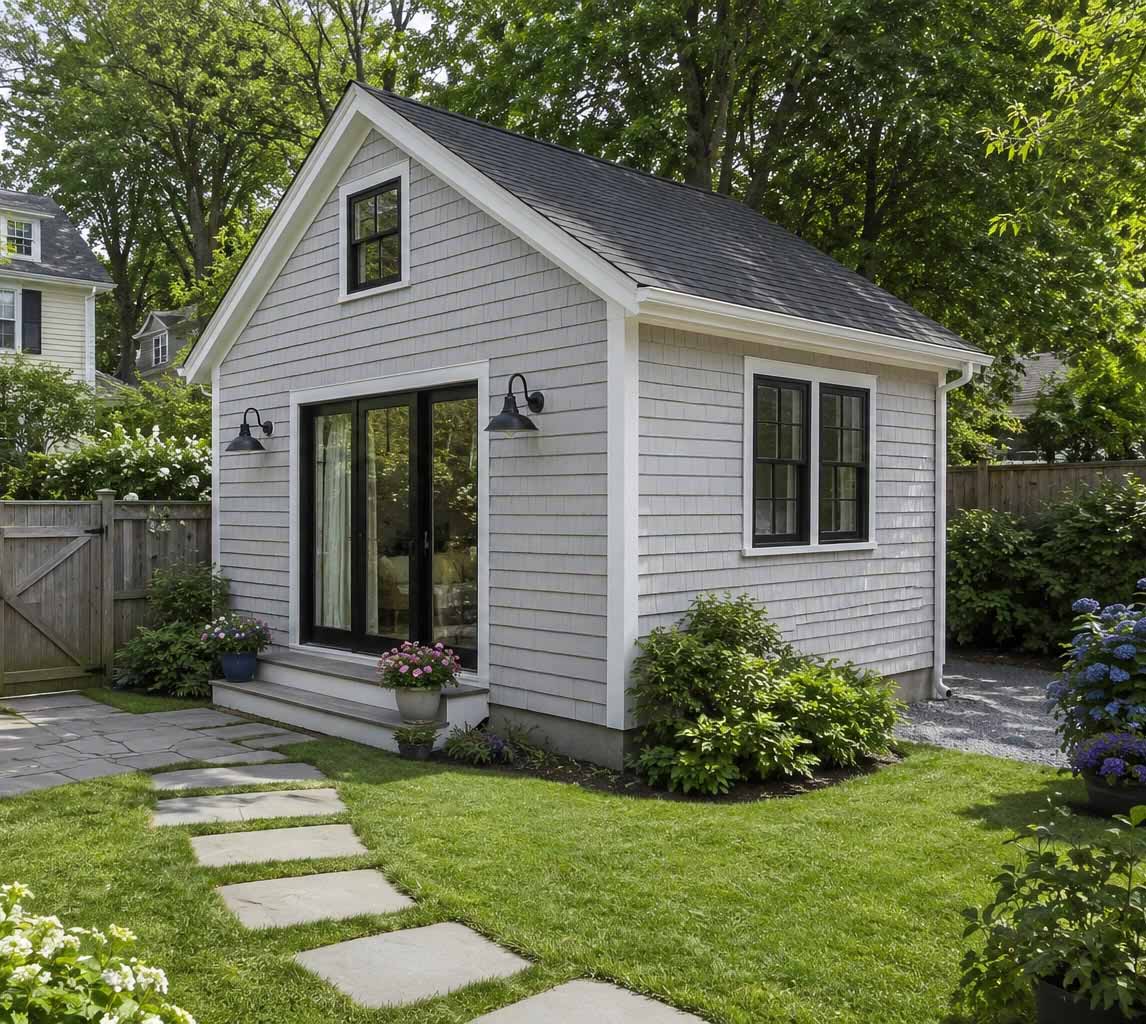
An ADU — short for accessory dwelling unit — is a second, self-contained living space built on the same property as your main home. This guide breaks down what they are, the different types you can build, what they cost, and what Massachusetts law actually says about them now.
What counts as an ADU?
An ADU is a fully independent living space — it has its own kitchen, bathroom, sleeping area, and its own entrance. It sits on the same lot as your primary home, but it functions as a separate unit. It's not a finished basement you sleep in occasionally. It's a real home.
You might hear it called an in-law suite, a granny flat, a backyard cottage, or a carriage house. All the same idea. The official term is accessory dwelling unit, but what matters is what it does: give someone a complete, livable space on your property.
The different types of ADUs
There are three main ways to add an ADU to your property, and each comes with its own trade-offs.
Attached ADU Built as an addition to your existing home — like adding a unit above a garage or extending off the back of the house. It shares a wall with your primary residence but has its own entrance and utilities.
Detached ADU A completely separate structure on your property — a backyard cottage, a converted garage, or a brand-new standalone build. Most people picture this one when they hear "ADU." More privacy for both households.
Interior ADU (conversion) Converting existing space inside your home — a basement, an attic, or a large ground-floor room — into a self-contained unit. Usually the most affordable option since the structure is already there.
Who builds one and why
There's no single profile for an ADU homeowner. We've built them for a lot of different reasons:
- A family wants an aging parent close by without sharing a front door
- A homeowner wants rental income without buying a second property
- Someone has grown kids who need a landing pad while they get on their feet
- A homeowner is looking to increase property value before selling
- A couple wants a dedicated space for a home office or studio that's actually separate
Whatever the reason, the result is the same: more value and more flexibility out of the property you already own.
What the new Massachusetts ADU law means for you
This is important. Massachusetts passed the Affordable Homes Act in August 2024, and it went into effect February 2, 2025. The big change: ADUs are now legal by right in single-family zoning districts across the entire state.
What "by right" means in plain English: you no longer need a special permit or a public hearing to build one. If your property meets the requirements, you can move forward.
The law sets the maximum size at 900 square feet or half the square footage of your main home — whichever is smaller. Your town can still set rules around setbacks, height, and whether the ADU can be used as a short-term rental. But they can't just say no.
In the first six months of 2025, homeowners across Massachusetts filed over 840 ADU applications statewide — and more than 550 were approved. This is moving fast.
How much does an ADU cost in Massachusetts?
The honest answer: it depends on what you're building and where you're starting from. A basement conversion costs a lot less than a detached new build. Here are rough ranges we see:
- Interior conversion (basement or attic): $80,000–$150,000
- Attached ADU addition: $120,000–$200,000
- Detached ADU, new construction: $150,000–$300,000+
Those numbers move based on size, the complexity of utility connections, the finishes you choose, and what the site requires. The most important thing is to know your number before you start designing — otherwise you're building a plan around a budget you haven't confirmed.
Is your property a good candidate for an ADU?
A lot of homeowners come to us with a great idea and find out their lot isn't ready for it — wrong setbacks, not enough square footage, utility complications. Catching that early saves you a lot of time and money.
Here are the basic questions to start with:
- Do you own a single-family home in Massachusetts?
- Is there space on your lot for an addition or separate structure?
- Does your lot meet your town's setback requirements?
- Do you have the utility capacity to support a second unit?
If you're not sure, that's exactly what a feasibility assessment is for. Before we draw a single line, we check zoning, code, utility capacity, and realistic budget — so you're not committing to a full project before you know it'll work.
We do this through our FlexUnit™ ADU service — a purpose-built process for Massachusetts homeowners that takes you from initial idea to permitted, built, and finished unit. The feasibility and budget roadmap is a paid phase ($3,500, credited in full if you move to construction), so you're not flying blind.
An ADU can be a rental unit, a space for family, or just a smarter use of land you already own. The first step is figuring out if your property can support one — and that's exactly what we're here for. Book a free consultation with BSDC.
What's possible on your property?
Tell us about your project and we'll schedule your free consultation.