
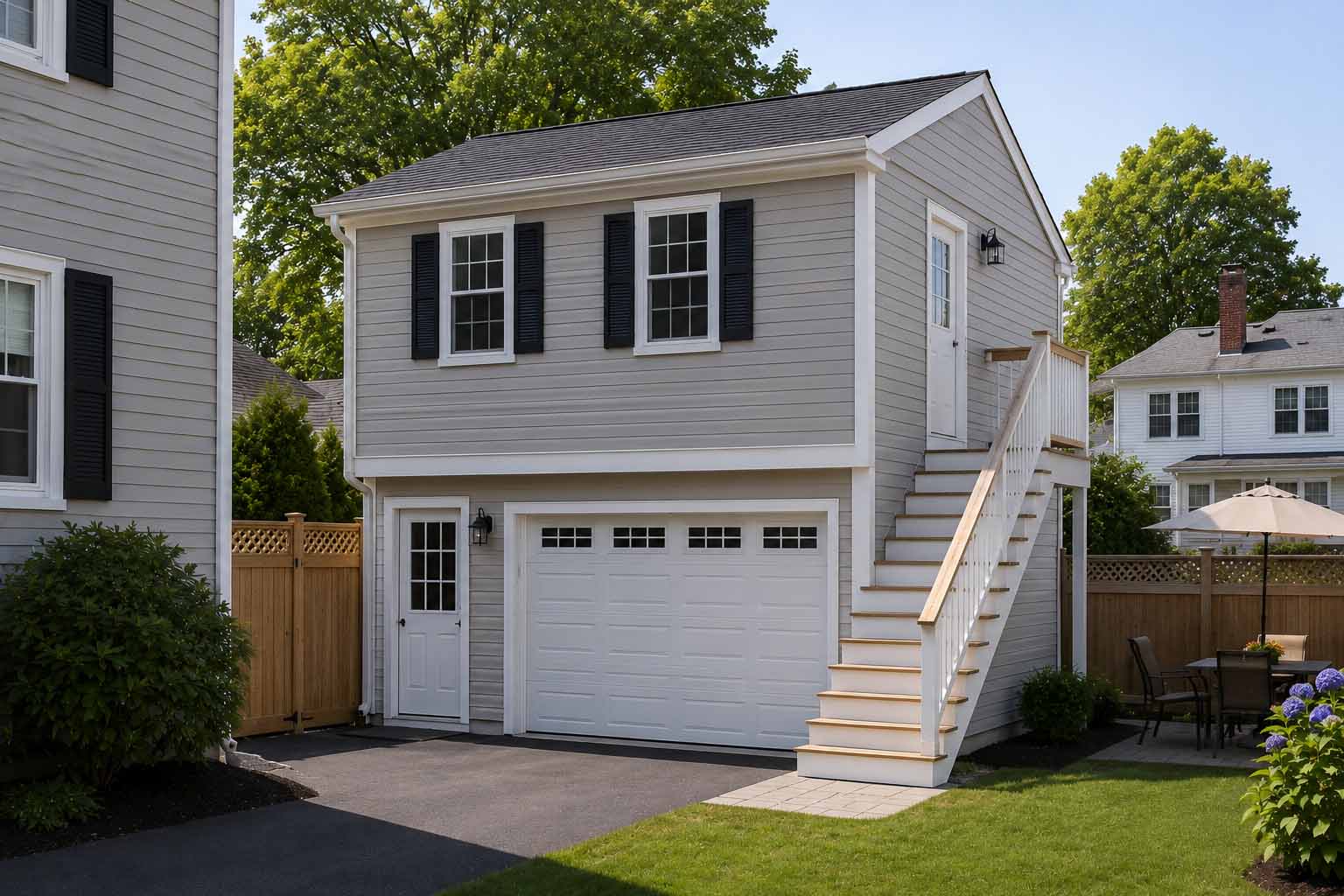
A detached ADU is its own freestanding structure built on the same lot as your home — and it's one of the most common things Massachusetts homeowners are asking about right now. This post covers what state law actually says, what your town can still control, and what the permitting process looks like before you build.
What makes an ADU "detached"
A detached ADU is a completely separate structure from your main home — not an addition, not a converted basement. Think a backyard cottage, a newly built studio, or a converted garage that's been fully finished out into an independent living space.
It has to function as a complete, self-contained unit. That means its own kitchen, bathroom, sleeping area, and a separate entrance — either directly from the outside, or through a shared entry hall or corridor that meets state building code requirements for safe egress.
The "detached" part is what sets it apart from an attached ADU or an interior conversion. It sits independently on your lot. That also tends to make it the most private option for both households — and often the most involved to build.
What Massachusetts law says you can build
Here’s a great resource to all the ADU regulations in the state of Massachusetts.
In August 2024, Governor Healey signed the Affordable Homes Act into law. Section 8 of that legislation amended the Massachusetts Zoning Act to allow ADUs to be built by right in single-family zoning districts statewide. It went into effect February 2, 2025.
Here's what the law specifically requires an ADU to comply with:
- It must maintain a separate entrance, either directly from the outside or through a shared entry hall or corridor that meets state building code egress requirements
- It must be no larger than half the gross floor area of the primary home, or 900 square feet — whichever is smaller
- It must meet any additional local municipal restrictions your town imposes
"By right" means you no longer need a special permit or discretionary zoning approval to build one. If your property qualifies, you apply for a building permit and move forward. Towns cannot require a special permit or variance for a compliant ADU.
What your town can and can't control
This is where a lot of homeowners get tripped up. The state law sets the floor — but local towns still have real authority over certain things.
What municipalities can regulate:
- Dimensional setbacks — how far the structure has to sit from property lines
- The bulk and height of the structure
- Site plan review
- Title V septic system requirements
- Short-term rental use (your town can restrict or prohibit using your ADU as an Airbnb-style rental)
What municipalities cannot do:
- Require owner occupancy of either the ADU or the primary home
- Require a special permit or other discretionary approval for a compliant ADU
- Require more than one parking space for an ADU located more than half a mile from a commuter rail station, subway station, ferry terminal, or bus station
- Require any parking at all for an ADU located within half a mile of those transit options
The practical takeaway: your town's setback requirements and septic situation are the two things most likely to affect whether and where a detached ADU can go on your property. Those vary town by town and lot by lot — which is exactly why a feasibility check matters before any design work starts.
What the permit process looks like
Building a detached ADU requires a building permit — that doesn't change under the new law. What changed is that towns can no longer require a special permit or hold a public hearing before issuing one for a compliant ADU.
Here's what permitting involves:
- Submitting architectural plans stamped by a licensed architect
- Demonstrating compliance with local setback and dimensional requirements
- Addressing any Title V or septic considerations (your local board of health handles this)
- Complying with Massachusetts building code for egress, electrical, plumbing, and structural requirements
Your town's building department is the right starting point for understanding the specific process and timeline in your area. Permit timelines vary, and some towns are processing ADU applications faster than others now that the by-right approval is in effect.
What to sort out before you start
A detached ADU is a significant build. Before you get into design or cost conversations, there are a few things worth confirming upfront:
Your lot's setbacks. Detached structures have to meet your town's setback requirements from property lines. Depending on your lot size and shape, this can constrain where — or whether — a detached structure fits.
Your septic or sewer situation. Adding a second unit means adding load to your waste system. If you're on a private septic system, Title V compliance for ADUs has its own guidance from the Massachusetts Department of Environmental Protection. This is worth understanding early — it can affect feasibility and cost.
Utility connections. A detached ADU needs its own electrical, plumbing, and potentially gas connections run to it. The complexity of that depends on where the new structure sits on your lot relative to existing utility lines.
Budget before design. It's easy to fall in love with a design before you know if you can afford to build it — or if your lot can support it. Getting a realistic budget number before committing to a design saves a lot of wasted time and money.
Detached ADUs are one of the bigger investments a homeowner can make — and when they're done right, they hold their value, generate income, and genuinely expand what your property can do. The key is doing the groundwork before you build anything. If you're in Massachusetts and want an honest look at whether your lot is a good candidate, BSDC offers a free consultation to start that conversation.
What's possible on your property?
Tell us about your project and we'll schedule your free consultation.